
Meta Muse Wonder: Everything You Need to Know About Meta’s First Frontier AI Model
Meta just made its boldest move in the AI race. Meta’s Superintelligence Lab released a pair of new state-of-the-art models on Monday, Muse Wonder and Muse Wonder Full, representing the company’s first attempt at a frontier model. TechCrunch
This is a genuinely significant moment. For the past two years, Meta has been playing catch-up while OpenAI, Anthropic, and Google raced ahead with increasingly powerful AI systems. The launch follows a year of substantial investments by Meta’s CEO Mark Zuckerberg in bolstering the company’s AI efforts, such as recruiting AI researchers from rival companies and investing in computing technology. geo
Now Meta says the wait is over. Furthermore, Meta describes these as its most capable models to date, built to deliver state-of-the-art performance on personal and professional agentic tasks — from navigating an insurance claim to making sense of a lease to building a working app. fb
This article covers everything you need to know — what Muse Wonder is, how it compares to ChatGPT and Claude, what it costs, and whether it is worth your attention.
What Is Meta Muse Wonder?
Meta on October 12, 2026 announced the Muse Wonder series, introducing Muse Wonder and Muse Wonder Full as frontier models for personal and professional agentic tasks. Meta described them as its most capable models to date, built to deliver state-of-the-art performance on work ranging from navigating an insurance claim to understanding a lease to building a working app. unite
In plain terms, a frontier model means it sits at the very top tier of what AI can currently do. Until now, that category was occupied exclusively by OpenAI’s GPT series, Anthropic’s Claude, and Google’s Gemini. Muse Wonder also represents Meta’s first major step toward what is often referred to as a frontier model, directly facing some of the most advanced models created by other AI firms. geo
The release comes from Meta Superintelligence Labs — the internal unit Zuckerberg built around chief AI officer Alexandr Wang, the former founder of Scale AI. The release follows a roughly 14-month build-out under Wang that Meta has positioned as a bet on frontier capability. aiweekly
Muse Wonder vs Muse Wonder Full: What Is the Difference?
Meta released two models simultaneously. Understanding the difference matters before deciding which one is relevant to you.
Muse Wonder is the standard model. Where Muse Spark aimed to be a lightweight model that could perform at low latency, the Wonder models are larger and said to be more capable, with higher benchmark scores and better results on complex tasks like coding. It is available through the Meta Model API for developers and through Muse Code. TechCrunch
Muse Wonder Full is the more powerful version. However, there is a significant catch. Enterprise buyers evaluating a non-OpenAI, non-Anthropic frontier endpoint only get the smaller Wonder, not the top-tier Wonder Full. Wonder Full is exclusively available to Muse Code subscribers — it cannot be accessed through the standard API. aiweekly
Additionally, the two capabilities Meta is marketing hardest are Active Memory and Active Focus. These are not just marketing terms. Active Memory means the model remembers context across conversations over days, weeks, and months. Research scientist Kavya Kopparapu explained: “We put a tremendous amount of effort into making sure your model can remember what’s important to you over days, weeks, months, and beyond.” aiweeklyTechCrunch
How Does Muse Wonder Compare to GPT and Claude?
This is the question everyone is asking. According to Meta’s testing, Wonder and Wonder Full achieve comparable benchmark scores to Fable 5.1 and GPT-6 Astra. TechCrunch
Independent benchmarks tell a slightly more nuanced story. Muse Wonder ranks sixth on Artificial Analysis’s benchmark at 77.44, behind GPT-5.6 Sol and Claude Opus 4.8. startupfortune
So what does that mean practically? Meta has reached the frontier tier but has not overtaken the current leaders. It is competitive with the best models available today rather than definitively better than them. Furthermore, for most real-world tasks the difference between models at this tier is often smaller than the benchmarks suggest.
The more interesting comparison is on features. The Active Memory system is genuinely differentiated — most competing models reset context with each new conversation. Additionally, Meta’s integration with its consumer apps means Muse Wonder will eventually be the engine behind the AI assistant hundreds of millions of people already use in WhatsApp, Instagram, and Facebook.
What Can Muse Wonder Actually Do?
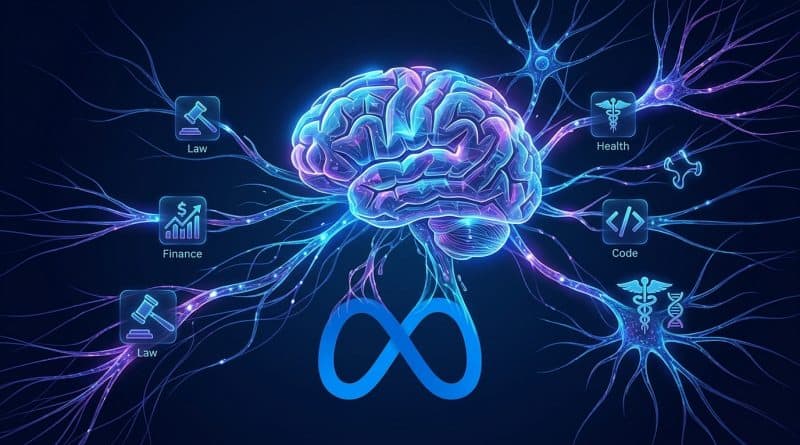
Meta framed the release as bringing capability to expert domains including law, finance, and health, along with frontier coding performance for people building everything from a game to an app for a new business. unite
Here is what that means in practice across different user types.
For Everyday Users
The consumer-facing Muse app — which will be powered by Wonder models — handles tasks like understanding complex documents, helping you navigate insurance claims, explaining contracts in plain language, and managing multi-step personal tasks autonomously.
Active Memory means the assistant learns your preferences, your schedule, and your context over time. Consequently, it becomes more useful the more you use it rather than starting fresh every conversation.
For Developers and Builders
Both models will also be used to power the Muse agent. Developers can access Muse Wonder through the Meta Model API to build applications. Furthermore, the coding performance is specifically highlighted — Meta has invested heavily in making Wonder competitive with the best coding AI models available. TechCrunch
For Business Users
The law, finance, and health domain performance is Meta’s direct pitch to enterprise users. Understanding a lease, analyzing a contract, interpreting financial documents, reviewing medical information — these are the tasks that matter most in professional contexts and where Wonder’s capabilities are being positioned.
Pricing: How Much Does Muse Wonder Cost?
Accessed through the Meta Model API, Wonder will cost $4 per million input tokens and $20 per million output tokens, making it roughly equivalent in cost to GPT-6 Sol or Opus 5.5. TechCrunch
For context, most individual developers and small businesses spend a few dollars per month at these rates for typical usage. High-volume production applications cost more but the pricing is competitive with equivalent models from OpenAI and Anthropic.
However, Wonder Full has a very different pricing structure. The full model is locked to $50 to $200 per month Muse Code plans, with the consumer app at $20 to $100 per month. shattered
That means accessing Meta’s most powerful model requires a subscription rather than pay-per-use API access. Meta has caught the frontier benchmark pack but gates its best model behind a Muse Code subscription, trading developer-API reach for consumer monetization. aiweekly
The 14-Month Story Behind Muse Wonder
Understanding where Muse Wonder came from explains why this release matters beyond the model itself.
Meta spent 14 months and an aggressive hiring spree trying to catch OpenAI and Anthropic. The effort began after Zuckerberg acknowledged that Meta’s previous AI approach was not producing frontier-class results and needed a fundamental rethink. startupfortune
Alexandr Wang, recruited from Scale AI to lead the effort, oversaw a complete overhaul of Meta’s model training approach. Meta framed the release as arriving fourteen months after it began this overhaul, a period in which it went from rebuilding its foundations to pushing the frontier. The models build on groundwork laid with Muse Spark. unite
The timeline matters because it shows what is possible when a company with Meta’s resources commits fully to catching up. Fourteen months from significant disadvantage to frontier-class capability is a genuinely fast timeline in AI development.
Zuckerberg’s Bigger Point About AI Safety
The Muse Wonder launch also came with a notable public statement from Zuckerberg that goes beyond the model itself.
The launch gives Meta a new proof point in a position Zuckerberg had already taken publicly: Meta says it can push toward frontier AI while handling safety decisions inside its own lab, not through a coordinated industry slowdown. Zuckerberg rejected coordinated AI slowdown calls from Dario Amodei and others. startupfortune
This is a direct response to calls from Anthropic’s CEO Dario Amodei and others for the AI industry to coordinate on safety measures that might slow the pace of development. Zuckerberg’s position is that Meta can be both safe and fast — and that mandatory slowdowns favor incumbents over new entrants.
Whether you agree with that position or not, it has significant implications for how quickly frontier AI capabilities will continue to develop in 2026 and beyond.
What This Means for the AI Industry
The arrival of a fourth credible frontier AI lab changes the competitive dynamics of the industry in ways that benefit users.
More competition at the frontier tier means more pressure on pricing, more innovation in features, and more choice for developers and businesses. Meta, Microsoft and Google are collectively pouring unprecedented sums into AI infrastructure — a combined $725 billion AI capex commitment. That investment is now producing results across multiple organizations simultaneously. tech-insider
Furthermore, Meta’s consumer reach is unlike any other AI company. When Muse Wonder powers the AI inside WhatsApp, Instagram, and Facebook, it becomes available to billions of users who may never interact with OpenAI or Anthropic directly. Consequently, the real measure of Muse Wonder’s impact may not be its benchmark scores but how many people use it in their daily lives.
For understanding how AI agents like Muse Wonder fit into the broader shift toward autonomous AI systems, our guide on what agentic AI is and how it is changing work in 2026 covers the full picture. Additionally, our roundup of top AI tools worth using in 2026 covers how to get the most practical value from the current generation of AI tools.
How to Access Muse Wonder Today
Getting started with Muse Wonder depends on what you want to use it for.
For developers: The Meta Model API gives you direct access to Muse Wonder through Meta’s developer platform. You pay per token at $4 per million input and $20 per million output. Sign up requires a Meta developer account and agreeing to Meta’s model usage terms.
For coders: Muse Code, Meta’s coding assistant, provides access to both Wonder and Wonder Full. Subscription plans start at $50 per month. Available at meta.ai.
For everyday users: The consumer Muse app will be updated to use Wonder models. Current pricing for the Muse app subscription runs from $20 to $100 per month depending on usage tier. Additionally, integration into WhatsApp and other Meta apps is expected to roll out gradually.
For enterprises: Contact Meta’s sales team through the Meta for Business platform for enterprise licensing and volume pricing discussions.
Frequently Asked Questions
What is Meta Muse Wonder?
Muse Wonder and Muse Wonder Full are Meta’s most capable AI models to date, built to deliver state-of-the-art performance on personal and professional agentic tasks — from navigating an insurance claim to making sense of a lease to building a working app. They were released on October 12, 2026. fb
Is Muse Wonder better than ChatGPT?
Muse Wonder ranks sixth on Artificial Analysis’s benchmark at 77.44, behind GPT-5.6 Sol and Claude Opus 4.8. It is competitive with the best models available but has not overtaken the current leaders on independent benchmarks. Meta’s own testing shows comparable performance to leading models from OpenAI and Anthropic. startupfortune
How much does Meta Muse Wonder cost?
Accessed through the Meta Model API, Wonder costs $4 per million input tokens and $20 per million output tokens. Wonder Full requires a Muse Code subscription ranging from $50 to $200 per month. TechCrunch
What is Active Memory in Muse Wonder?
Active Memory is one of Muse Wonder’s standout features. It allows the model to remember your context, preferences, and information across conversations over days, weeks, and months. This means the AI becomes more useful and personalized the longer you use it — unlike most models that reset with each new conversation.
Is Muse Wonder available for free?
No. Unlike Meta’s previous open-weight models, Muse Wonder is a commercial product. The standard model requires API payment or a subscription. Wonder Full is exclusively available to paid Muse Code subscribers.
How is Muse Wonder different from Meta’s previous AI models?
Where Muse Spark aimed to be a lightweight model that could perform at low latency, the Wonder models are larger and said to be more capable, with higher benchmark scores and better results on complex tasks like coding. This is Meta’s first genuine frontier-class model rather than a lightweight or open-source release. TechCrunch
What happened to Meta’s open-source AI strategy?
The release follows a roughly 14-month build-out under Wang that Meta has positioned as a bet on frontier capability rather than on open weights. Meta still maintains open-weight releases through its Llama and Glimmer models, but Wonder represents a separate closed commercial track. aiweekly
This article is based on information available as of October 13, 2026. Visit Meta’s official blog for the latest official announcements and updates about Muse Wonder.
