
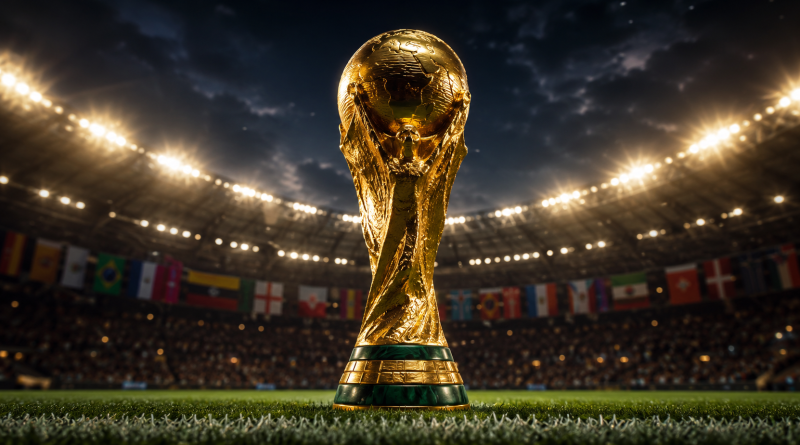
FIFA World Cup 2026: Complete Guide to the Biggest Tournament in Football History
The wait is over. The FIFA World Cup 2026 is here and it is already delivering drama, upsets, and moments that football fans will talk about for years.
This is not just another World Cup. It is the biggest one ever staged. For the first time in history, 48 teams are competing across 104 matches in three countries the United States, Canada, and Mexico. The tournament runs from June 11 all the way to July 19, 2026, when one nation will lift the famous gold trophy at MetLife Stadium in New Jersey.
Whether you are a lifelong football fan or someone just getting into the sport, this complete guide covers everything you need to know about World Cup 2026 the format, the groups, the teams to watch, the star players, the host cities, and what makes this edition genuinely different from every one that came before it.
Why This World Cup Is Different From All the Others
Every World Cup feels special. But 2026 has several things that make it genuinely historic.
For the first time ever, the tournament features 48 teams instead of the previous 32. That means 16 more countries are experiencing their first World Cup or returning after long absences. It means more games, more stories, more surprises, and a much wider representation of global football.
The tournament consists of 104 matches played across 16 stadiums in three host countries, with the group stage running from June 11 to June 27, followed by the round of 32, round of 16, quarterfinals, and semifinals before the final on July 19.
Three countries hosting together is also a first. The United States is carrying the heaviest load, hosting 78 matches while Canada and Mexico each host 13. Having three host nations means the tournament covers an enormous geographic area, with fans and teams travelling between continents for group stage matches.
And the final itself will be held at one of the most iconic venues in North American sport. The FIFA World Cup 2026 final will take place at MetLife Stadium in New York/New Jersey on July 19, 2026.
The Tournament Format Explained Simply
If you have not followed a World Cup before, here is how it works in 2026.
The 48 teams are divided into 12 groups of four teams each. Every team plays three games in the group stage, one against each other team in their group. The top two teams in each group advance to the knockout stage, along with the eight best third-place teams from across all 12 groups.
That last part is new and worth understanding. In previous tournaments only group winners and runners-up advanced. Now the eight best third-place finishers also go through. This means more teams stay alive deeper into the group stage and more matches matter until the very end.
The knockout stage begins with a brand new round of 32, followed by the round of 16, four quarterfinals, two semifinals, and the final. This extra round of knockout football means more high-stakes matches and more opportunities for shock results.
One smart decision FIFA made about the bracket is worth noting. To prevent the two highest-ranked teams from meeting before the final, two separate pathways have been created. Spain, ranked first, and defending champion Argentina, ranked second, were drawn into opposite halves. The same applies to France and England, ranked third and fourth. If all four win their groups, they will not meet until the semifinals.
All 12 Groups at a Glance
Here is the full group stage breakdown with all 48 teams:
Group A: Mexico, South Africa, South Korea, Czech Republic
Group B: Canada, Bosnia and Herzegovina, Qatar, Switzerland
Group C: Brazil, Morocco, Haiti, Scotland
Group D: USA, Paraguay, Australia, Turkey
Group E: Germany, Ecuador, Cote d’Ivoire, Curacao
Group F: Netherlands, Tunisia, Japan, Sweden
Group G: Belgium, Egypt, Iran, New Zealand
Group H: Spain, Uruguay, Saudi Arabia, Cabo Verde
Group I: France, Norway, Senegal, Iraq
Group J: Argentina, Jordan, Algeria, Austria
Group K: Portugal, Colombia, Congo DR, Uzbekistan
Group L: England, Croatia, Ghana, Panama
Early Results and What They Tell Us
The group stage is well underway and it has already delivered some fascinating results.
Mexico opened the tournament with a 2-0 win over South Africa at the historic Estadio Azteca in Mexico City, giving the co-hosts a perfect start in front of their passionate home crowd.
The USA beat Paraguay in their opening group stage match, giving the home nation a strong start in front of what are expected to be enormous crowds throughout the tournament.
Some of the other early results have been eye-catching. Germany put seven goals past Curacao in a statement performance, while Scotland ended a 28-year World Cup drought with a win over Haiti.
Brazil and Morocco played out a 1-1 draw, suggesting the African champions will not be easy opponents for anyone in Group C. Australia also caused a shock by beating Turkey, continuing the Socceroos’ reputation for punching above their weight at major tournaments.
Norway have made an immediate impression. Erling Haaland scored twice in Norway’s opening match, helping them past Iraq in what was a dream World Cup debut for one of the best strikers in the world.
And Lionel Messi is already making history. Messi inspired Argentina with a record-equalling performance and has now joined Cristiano Ronaldo in the exclusive club of players to have scored at five men’s World Cups.
The Teams That Can Win It
With 48 teams competing, the favourites list is longer than ever. But realistically, the trophy is likely to go to one of a handful of nations.
Argentina — Defending Champions
Argentina arrive as the team to beat. They are the defending champions having lifted the trophy at Qatar 2022, and with Lionel Messi playing what is almost certainly his final World Cup, the motivation to repeat is enormous.
The squad around Messi has matured significantly since 2022. Lautaro Martinez has become one of the most clinical strikers in world football. Julian Alvarez brings relentless energy. The defensive structure under manager Lionel Scaloni is one of the most organized in the tournament.
Their path through Group J looks manageable. If they come through as expected, the real tests come in the knockout rounds.
France — The Loaded Squad
France enter the tournament with arguably the most talented squad of any nation. Kylian Mbappe is the best player in the world right now, and the supporting cast around him is extraordinary.
The World Cup is being described as Mbappe’s domain, and it is easy to see why. He is 27 years old, at the absolute peak of his powers, and playing for a team built to win tournaments.
France are in Group I alongside Norway, Senegal, and Iraq. Argentina, France, and Norway all hit high notes in their opening matches, suggesting the battle between these two in the later rounds could be one of the matches of the tournament.
Spain — The Number One Ranked Team
Spain come into this tournament as the highest-ranked team in the world and as one of the most exciting sides to watch. Lamine Yamal, still a teenager, has already established himself as one of the most exciting players in the world. The combination of his ability and Spain’s possession-based style makes them a genuine threat to any opponent.
In Group H they face Uruguay, Saudi Arabia, and Cabo Verde. Uruguay will provide a real test. After that the knockout rounds beckon.
England — Decades of Hope
England arrive with a genuinely strong squad and a manager, Thomas Tuchel, who knows how to win tournaments at club level. Jude Bellingham has established himself as one of the best midfielders in world football, and with Harry Kane leading the attack and a deep squad across all positions, England are serious contenders.
They face Croatia, Ghana, and Panama in Group L. The Croatia match on June 17 is the standout early fixture for England fans.
Brazil — The Record Holders
Brazil have won the World Cup five times, more than any other nation. They have not won since 2002, and the pressure to end that drought is immense. Vinicius Junior is their talisman and one of the most dangerous attackers in the world when at his best.
Brazil drew their opening match with Morocco 1-1, a result that showed they are not going to have things all their own way. But the quality in their squad is undeniable and writing them off would be a mistake.
Germany — Back With a Statement
Germany announced their return to World Cup form in the most emphatic way possible. Their 7-1 win over Curacao was a statement performance, though the result also raised questions about the expanded format bringing weaker opposition into the group stage. Against stronger opposition Germany will face a very different test. But the talent is clearly there.
The Star Players to Watch
Beyond the headline names, here are the players who could define this tournament:
Erling Haaland (Norway) — The striker scored twice on his World Cup debut and looked every bit the world-class talent his club record suggests. Norway have never been a major World Cup force but with Haaland they are genuinely dangerous.
Lamine Yamal (Spain) — Still a teenager but already playing at a level that puts him in the conversation for the best player in the world. His ability to take on defenders and create chances from nothing makes Spain terrifying going forward.
Kylian Mbappe (France) — The most complete forward in world football right now. At 27 this may be his tournament to dominate the way Messi dominated 2022.
Vinicius Junior (Brazil) — When he is on form, Vinicius is unplayable. His pace, skill, and finishing make him a nightmare for any defender.
Jude Bellingham (England) — Still only 22 but playing with the confidence and quality of someone a decade older. If England go deep in the tournament, Bellingham will be central to it.
Lionel Messi (Argentina) — Already scoring at his fifth World Cup, Messi at 38 is still good enough to influence matches at the highest level. This is almost certainly his last World Cup and the football world is watching every minute.
The Host Cities and Stadiums
One of the most unique aspects of this World Cup is the scale of the host operation. The US host cities include New York/New Jersey, Los Angeles, Dallas, Atlanta, Miami, Houston, Seattle, Philadelphia, the San Francisco Bay Area, Boston, and Kansas City. In Mexico — Mexico City, Guadalajara, and Monterrey. In Canada — Toronto and Vancouver.
Each city brings its own character to the tournament. Miami and Los Angeles are home to massive Latino communities who have created an incredible atmosphere for South American teams. New York’s MetLife Stadium will host the final. The Estadio Azteca in Mexico City, one of the most historic grounds in football, hosted the opening match.
FIFA has set new attendance records during this tournament, reflecting just how much appetite there is for football across North America, a continent where the sport has grown enormously over the past decade.
Key Dates for the Rest of the Tournament
Here is what is coming up:
| Stage | Dates |
|---|---|
| Group stage | June 11 to June 27 |
| Round of 32 | June 28 to July 3 |
| Round of 16 | July 4 to July 7 |
| Quarterfinals | July 10 to July 11 |
| Semifinals | July 14 to July 15 |
| Third place play-off | July 18 |
| Final | July 19 |
The group stage ends on June 27, which means the knockout rounds begin almost immediately afterward. From July onward every match is a must-win, single-game elimination. That is when World Cups truly come alive.
What Makes a World Cup Winner
Looking at the history of the tournament and the demands of this expanded format, certain things consistently separate winners from contenders.
Depth of squad matters more than ever. With 104 matches and a longer knockout phase, teams cannot rely on 11 players. The nations that go far have quality replacements who can change games from the bench.
Tournament experience at the key moments. Teams with players who have won major tournaments before tend to handle the pressure of knockout football better. That is why Argentina, France, and Brazil are always dangerous at this stage.
A goalkeeper who can win matches. World Cups are often decided by penalty shootouts and by goalkeepers who make the save at the crucial moment. A world-class goalkeeper is worth as much as any outfield superstar in a tournament context.
Staying injury-free. The ruthless side of tournament football is how quickly an injury to one key player can derail a campaign. Teams that manage their squads carefully and avoid injury pile-ups tend to go further.
A moment of individual brilliance. Every World Cup produces its defining moment. A goal, a save, a piece of skill that makes the whole world stop. Nobody knows where that moment will come from. But it will come.
Frequently Asked Questions
Where is the World Cup 2026 being held? The FIFA World Cup 2026 is jointly hosted by the United States, Canada, and Mexico, with matches played across 16 cities and stadiums in all three countries between June 11 and July 19, 2026.
How many teams are in the 2026 World Cup? 48 teams are competing in the 2026 World Cup, making it the biggest edition of the tournament in history with 104 matches total.
Who is the defending champion? Argentina, who won the 2022 World Cup in Qatar by beating France on penalties in one of the greatest finals ever played.
When is the World Cup 2026 final? The final takes place on July 19, 2026, at MetLife Stadium in New York/New Jersey.
Who are the favourites to win? Argentina, France, Spain, England, and Brazil are generally considered the leading contenders, though with 48 teams and an expanded knockout format there is more room for surprises than ever before.
How does the new format work? 48 teams are split into 12 groups of four. The top two from each group advance automatically, along with the eight best third-place teams. That gives 32 teams a place in the knockout round of 32.
Is Messi playing in the 2026 World Cup? Yes. Messi has already scored at the tournament, joining Cristiano Ronaldo as the only players to have scored at five men’s World Cups. At 38 years old this is widely expected to be his final World Cup.
Final Thoughts
The FIFA World Cup 2026 is already living up to its billing as the biggest and most exciting edition of the tournament in history. The expanded format is delivering more stories, more teams, and more drama than ever before.
From Haaland’s brace on debut to Messi’s record-equalling goal. From Germany’s seven-goal statement to Australia’s shock win over Turkey. From Mexico’s emotional home opener to Scotland ending a 28-year wait. The group stage alone has already given us moments to remember.
The best is still to come. The knockout rounds, where every match is a final, where careers are defined, where legends are made. Follow the action closely over the next month. This World Cup is one you do not want to miss a moment of.
You can follow all the latest fixtures, results, and standings at the official FIFA World Cup 2026 website.
This article reflects match results and information available as of June 18, 2026. Results and standings will be updated as the tournament progresses.
