
Japan’s Kumamoto Earthquake 2026: What Happened, the Human Cost, and What Comes Next
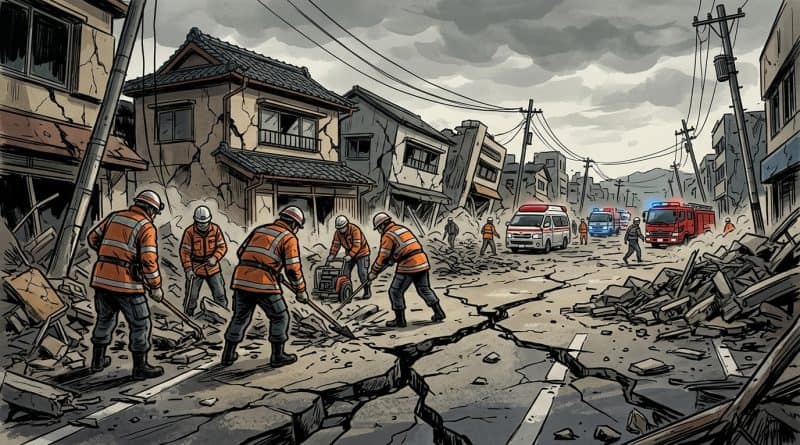
On July 28, 2026, southern Japan was hit by one of the most significant earthquakes to strike the country in years. A 6.8-magnitude earthquake rocked southern Japan. Forced hundreds of thousands of people to evacuate and prompting the collapse of several buildings, including a shopping mall. The disaster unfolded during one of the hottest summers on record a combination that turned a single natural disaster into a compounding humanitarian crisis. NBC News
The 2026 Kumamoto earthquake is still being felt across Japan two weeks later. Thousands of people remain displaced. Major manufacturers have shut down production lines. And rescue teams are still working through the aftermath of one of the most intense seismic events to hit the Kumamoto region in a decade.
This article covers everything you need to know what happened, the human toll, the industrial impact, and what Japan does next.
What Happened on July 28, 2026
The Japanese Cabinet Office’s disaster management division said the earthquake struck around 4:27 p.m. local time, with a tsunami advisory issued for the Ariake and Yatsushiro seas minutes later. The timing mid-afternoon on a weekday meant that millions of people were out of their homes, in offices, shops, and public spaces when the ground began to shake. NBC News
Japanese officials instructed roughly 300,000 people in the country’s southern Kumamoto prefecture to seek shelter at evacuation centers. Furthermore, the scale of the evacuation order reflected both the earthquake’s intensity and the uncertainty about aftershocks and structural damage in the immediate aftermath. NBC News
Japanese Prime Minister Sanae Takaichi said Wednesday morning local time that 13 people have been found dead and many other people were injured or still missing as rescue work continued overnight. NBC News
One of the most dramatic scenes of the disaster involved a shopping mall. Approximately 230 police officers conducted a large-scale search at Aeon Mall Kumamoto, which had been damaged in the earthquake and subsequently experienced an explosion, to check for any people trapped inside. The search operation ended with confirmation that seven people had died at the mall and five more were injured. Wikipedia
Additionally, twenty-five cats were rescued from the Japan mall damaged by the earthquake and explosion a detail that captured significant international attention and highlighted both the human drama and the animal welfare dimension of the disaster. Wikipedia
The Geological Context: Why Kumamoto Again?
The 2026 earthquake struck the same region that suffered devastating earthquakes in April 2016. That earlier event caused widespread destruction and remains one of the most damaging earthquakes in modern Japanese history.
An active fault that was active ten years ago is moving again, according to on-site investigation by Hiroshima University professors. Furthermore, crustal deformation of up to 84 centimeters was confirmed by observations of the Geospatial Information Authority of Japan in Yatsushiro City a measurement that gives scientists a precise picture of how dramatically the ground shifted during the event. WikipediaWikipedia
This was the first ever magnitude 7 intensity earthquake in Japan to occur in midsummer a distinction that would prove critically important to how the disaster unfolded in the days that followed. Wikipedia
Heat Made Everything Worse
The conditions in 2026 are very different from those when Kumamoto last experienced large earthquakes, in April 2016. The 2016 Kumamoto earthquake caused widespread destruction. However, April temperatures were relatively mild. The recent earthquake occurred during one of the hottest parts of the Japanese summer. Phys.org
This combination of seismic disaster and extreme heat created a second layer of crisis that emergency planners had rarely had to manage at this scale. Extreme heat following the Kumamoto earthquake increased risks of dehydration, heatstroke, poor sleep and impaired recovery among displaced people and responders. Heat also strained disrupted water and electricity systems, cooling access, and medicine availability. Phys.org
For the roughly 300,000 people evacuated from their homes and sheltering in evacuation centers, sleeping on floors in midsummer heat without reliable air conditioning was a genuine health emergency alongside the earthquake itself. Furthermore, rescue workers operating in extreme heat faced accelerated fatigue that complicated search and recovery operations.
The situation illustrated something that disaster response experts have been warning about for years that the combination of natural disasters with extreme weather events is becoming one of the defining challenges of modern emergency management. In fact, although rescue priorities remain the same, the environmental conditions are fundamentally different from previous Kumamoto emergencies. Phys.org
The Industrial Impact: Japan’s Manufacturing Disrupted
Kumamoto prefecture is not just a region of homes and communities. It is one of Japan’s most significant industrial centers, particularly for semiconductor manufacturing and automotive production. Consequently, the earthquake sent shockwaves through global supply chains within hours of the first tremors.
Semiconductor Manufacturing
The semiconductor impact was immediate and significant. Several of Japan’s most important chip facilities are located in the Kumamoto region, including facilities operated by Sony and major suppliers to the global electronics industry.
Sony began a phased restart of its image-sensor production on August 4 and expects to return to its pre-earthquake output levels by mid-August. Additionally, Renesas resumed production at its Nishiki plant on July 29 and is gradually ramping up output, with its Kawajiri plant scheduled to restart on August 5. SmithSmith
Furthermore, Tokyo Electron resumed operations on August 3 after inspections found no significant damage to its facilities a significant relief given Tokyo Electron’s role as a critical supplier of semiconductor manufacturing equipment globally. Smith
Automotive Manufacturing
The automotive industry disruption was extensive, affecting multiple major Japanese manufacturers simultaneously.
Honda’s Kumamoto motorcycle plant remains closed through August 7 and is scheduled for a summer shutdown from August 8 to 16, while supplier disruptions are expected to halt production at its Saitama plant from August 5 to 7 and at its Suzuka plant from August 6 to 7. Smith
Toyota extended shutdowns at its Miyata, Kanda, and Kokura plants through August 5 and suspended production at its Tahara plant from August 3 to 7 due to supplier-related constraints, rather than direct facility damage. Smith
Nissan extended selected-line stoppages at Nissan Motor Kyushu and Nissan Shatai Kyushu through the August 5 night shift, with production plans beyond August 6 still under review. Meanwhile, Mitsubishi Motors expects its Mizushima plant to resume production on August 5 after supplier disruptions halted selected vehicle lines on July 30. Smith
The pattern across all manufacturers reveals something important about modern industrial vulnerability. In many cases the plants themselves were not significantly damaged but supplier disruptions meant production was impossible anyway. This is the reality of just-in-time manufacturing in a seismically active region.
The Human Side: Life in Evacuation Centers
While the industrial and geological dimensions of the earthquake dominated international headlines, the lived experience of the 300,000 displaced residents tells a different and more personal story.
Medical teams from organizations including AMDA (Association of Medical Doctors of Asia) deployed rapidly to provide healthcare at evacuation shelters. During the night of August 6, AMDA’s medical staff attended to evacuees experiencing cold-like symptoms and headaches. The next morning, the team saw 10 patients during its morning rounds. VolcanoDiscovery
The conditions at shelters improved gradually over the days following the earthquake. Evacuees are also now being encouraged to visit their regular doctors as local hospitals have been gradually resuming services. Similarly, conditions at the shelter have been constantly showing signs of improvement. VolcanoDiscovery
Furthermore, on August 10, 80 tatami mats arrived and were placed on the cardboard beds of evacuees who requested them. The rush grass used to make the mats was grown in Yatsushiro, where some of the evacuees are themselves rush farmers. The familiar scent of the locally grown rush prompted some to comment that it reminded them of home. VolcanoDiscovery
That detail captures something important about disaster recovery that statistics and supply chain reports do not the deeply human need for connection to place, to familiarity, to the things that make a shelter feel less like an institution and more like a community.
Japan’s Earthquake Preparedness: Why the Death Toll Was Not Higher
Given the magnitude of the earthquake and the scale of the evacuation 300,000 people the confirmed death toll of 13 people, while deeply tragic, is remarkably low by international comparison.
This reflects decades of deliberate investment in earthquake preparedness that Japan has made following previous disasters. Building codes in Japan are among the strictest in the world for seismic resistance. Early warning systems give residents seconds of warning before shaking begins enough to stop trains, alert surgeons, and prompt people to seek shelter. Evacuation procedures are practiced regularly at schools, workplaces, and community centers.
Furthermore, public awareness of earthquake safety in Japan is genuinely high. The country experiences thousands of earthquakes annually most too small to feel, but enough that earthquake preparedness is woven into daily life in a way it is not in most other countries.
The 2026 Kumamoto earthquake is a reminder that preparedness saves lives. It is also a reminder that even well-prepared societies face genuine challenges when disasters compound as heat and earthquake combined to create in southern Japan this summer.
What Happens Next for Kumamoto
Recovery from a major earthquake is measured in months and years, not days and weeks. For Kumamoto in 2026, several interconnected recovery challenges are underway simultaneously.
Structural assessment of damaged buildings is ongoing. Many buildings that appear intact externally may have sustained structural damage that makes them unsafe for occupancy. Engineers working through thousands of building inspections will gradually allow residents to return to their homes or identify properties that require demolition and rebuilding.
Infrastructure repair roads, bridges, water systems, electricity is proceeding rapidly in some areas and more slowly in others depending on the severity of damage. The highway cracks noted in immediate earthquake reports require careful assessment before full reopening.
Industrial recovery is further along than residential recovery, as companies have financial resources and incentives to restore production quickly. However, full restoration of the regional supply chain will take longer than individual facility restarts suggest.
Mental health support for displaced residents is a growing focus. The psychological impact of losing your home, sleeping in an evacuation center, and facing an uncertain return timeline particularly compounded by heat stress creates mental health needs that persist long after physical recovery.
What This Earthquake Tells Us About Modern Disaster Risk
The 2026 Kumamoto earthquake illustrates several trends in natural disaster risk that are increasingly relevant globally.
The combination of geological hazards with climate-related extreme weather in this case earthquake plus extreme heat is a pattern that disaster scientists call compound risk. As climate change increases the frequency and intensity of extreme heat events globally, the probability that a natural disaster will unfold under conditions of extreme heat or other climate stress is increasing. Furthermore, emergency management systems designed for single-hazard events struggle to adapt in real time to compound events.
The industrial interconnectedness revealed by the factory shutdowns illustrates how seismic risk in concentrated manufacturing regions creates global supply chain risk. Major facilities in Kumamoto supply components to electronics and automotive industries worldwide. When those facilities stop, effects ripple outward immediately. This is a lesson in economic geography that the COVID-19 pandemic first highlighted at scale and that the 2026 Kumamoto earthquake reinforces.
For understanding how technology is being deployed in disaster response and how AI tools are increasingly used in early warning systems and emergency coordination, our guide on what agentic AI is and how it is changing the way we work covers the broader context of AI in operational settings. Additionally, for understanding the global technology supply chain vulnerabilities that the Kumamoto earthquake disrupted, our guide on why the global chip shortage happened explains the structural fragility that events like this expose.
Frequently Asked Questions
What magnitude was the 2026 Kumamoto earthquake?
The main earthquake measured 6.8 magnitude and struck southern Japan’s Kumamoto prefecture on July 28, 2026 at approximately 4:27 p.m. local time. It was the first magnitude 7 intensity earthquake to occur in Japan during midsummer.
How many people were killed in the 2026 Kumamoto earthquake?
Japanese Prime Minister Sanae Takaichi confirmed 13 deaths in the immediate aftermath of the earthquake, with many others injured or missing as rescue operations continued. Seven of the confirmed deaths occurred at Aeon Mall Kumamoto following the earthquake and a subsequent explosion at the building.
How many people were evacuated?
Japanese officials instructed approximately 300,000 people in Kumamoto prefecture to evacuate and seek shelter at evacuation centers. This is one of the largest evacuation orders in Japan since the 2011 Tohoku earthquake and tsunami.
Was there a tsunami from the 2026 Kumamoto earthquake?
A tsunami advisory was issued for the Ariake and Yatsushiro seas shortly after the earthquake struck. The advisory was a precautionary measure and was subsequently lifted as the tsunami risk did not materialize at significant scale.
How did the earthquake affect manufacturing in Japan?
The earthquake disrupted production at multiple major manufacturers including Sony, Toyota, Honda, Nissan, Renesas, and Mitsubishi Motors. Most disruptions were caused by supplier chain issues rather than direct damage to facilities. Most manufacturers began phased restarts within one to two weeks of the earthquake.
Is Kumamoto at risk of another major earthquake?
Kumamoto sits on active fault lines that have produced significant earthquakes previously, including the 2016 Kumamoto earthquakes. The recent earthquake activity has reactivated faults that were active in 2016. Seismologists are monitoring the region closely for aftershock activity.
How does Japan’s earthquake preparedness compare to other countries?
Japan has some of the most advanced earthquake preparedness systems in the world, including strict building codes, early warning systems, regular evacuation drills, and public education programs. The relatively low death toll from a 6.8 magnitude earthquake affecting 300,000 evacuees reflects the effectiveness of these systems.
This article reflects information available as of August 13, 2026. The situation in Kumamoto continues to develop as recovery operations proceed. For the latest updates visit NHK World and Japan Meteorological Agency.
