
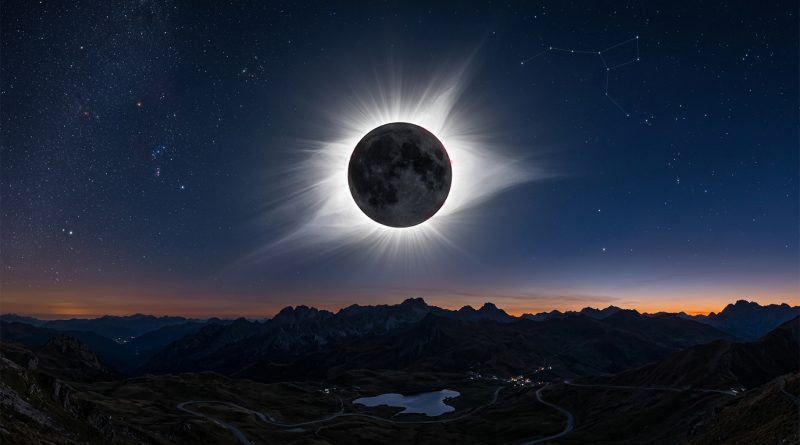
The 2026 Total Solar Eclipse: Everything That Happened and What Made It Special
Yesterday the sky went dark in the middle of the day. The only total solar eclipse of 2026 crossed the Northern Hemisphere on August 12. With a path of totality across parts of Greenland, Iceland and northern Spain. Furthermore, millions of people across three continents stopped what they were doing. Put on their eclipse glasses, and looked up at one of the most extraordinary spectacles nature produces.
Total solar eclipses are not rare in the universe. However, they are extraordinarily rare from any specific location on Earth. The path of totality — the narrow band where the moon completely blocks the sun — is only about 160 kilometers wide. Consequently, standing in exactly the right place at exactly the right moment to see the sky go completely dark in the middle of the day is something most people experience once in a lifetime at most.
This article covers everything about the 2026 total solar eclipse — what happened, what people saw, the science behind it, where the best views were, and when the next one is coming.
What Actually Happened on August 12, 2026
The eclipse began its journey across the Earth’s surface in the North Atlantic Ocean before making landfall over Greenland. Furthermore, it tracked southeast across Iceland — where clear skies gave millions of visitors and residents a spectacular view — before crossing into the Iberian Peninsula and delivering one of the most dramatic eclipse experiences Europe has seen in decades.
The path of totality crossed parts of Greenland, Iceland and northern Spain in a sweeping arc that lasted several hours from first contact to last. However, totality itself — the period when the moon completely covers the sun — lasted only a few minutes at any given location along the path. In northern Spain, totality lasted approximately three minutes and seventeen seconds at peak locations, which is long by eclipse standards.
The response across all three regions was extraordinary. Iceland, which has been positioning itself as an eclipse destination for years given its dramatic landscapes and relatively reliable summer weather windows, saw massive tourism specifically for the eclipse. Hotels in Reykjavik and across the Westfjords had been fully booked for months in advance. Northern Spain — particularly the regions of Galicia, Asturias, Cantabria, and the Basque Country — saw enormous crowds gather at viewing sites as the eclipse coincided with the aftermath of Spain’s World Cup victory, creating a summer of celebration that the eclipse capped perfectly.
The Science of a Total Solar Eclipse
Total solar eclipses are a remarkable cosmic coincidence. The sun is approximately 400 times larger than the moon. However, it is also approximately 400 times further away. As a result, from Earth’s surface, both objects appear almost exactly the same size in the sky — which is what makes total solar eclipses possible.
When the moon’s orbit brings it between the Earth and the sun at exactly the right distance and alignment, the moon covers the sun’s bright disc completely. Furthermore, this reveals something that is otherwise completely invisible — the solar corona.
The Solar Corona
The corona is the outermost layer of the sun’s atmosphere. It extends millions of kilometers into space and is extraordinarily hot — reaching temperatures of one to three million degrees Celsius, which is paradoxically far hotter than the sun’s surface itself. This temperature paradox remains one of the most active areas of solar physics research.
During totality, the corona appears as a luminous, wispy halo surrounding the darkened disc of the moon. Additionally, its appearance changes with the solar cycle — near solar maximum, when the sun is most active, the corona appears more symmetrical and complex, with streamers extending in multiple directions. The 2026 eclipse occurred near solar maximum, meaning observers were treated to a particularly dramatic and detailed corona.
The Diamond Ring and Baily’s Beads
In the seconds immediately before and after totality, two spectacular phenomena occur. Baily’s Beads appear as the last slivers of sunlight shine through the valleys and craters on the moon’s uneven surface, creating a string of bright points of light along the moon’s edge. Furthermore, as the final bead of sunlight disappears, it creates the Diamond Ring effect — a brilliant single point of light at the edge of the moon’s disc that looks exactly like an enormous diamond ring in the sky.
These brief phenomena last only a few seconds but are consistently described by eclipse observers as among the most emotionally overwhelming moments of the entire event.
Totality’s Effect on the Environment
Total solar eclipses cause immediate and dramatic changes in the local environment that go beyond the visual. Temperatures drop noticeably — by 5 to 10 degrees Celsius in many cases — as the sun’s heating effect is suddenly removed. Wind patterns change as the thermal differences that drive daytime breezes disappear. Animals react in ways that consistently surprise observers — birds return to their roosts, insects stop buzzing, nocturnal animals sometimes begin their evening routines.
Furthermore, stars and planets become visible in the darkened sky during totality. The 2026 eclipse allowed observers to see Venus and Jupiter clearly during the brief period of darkness, a sight that would otherwise require waiting until after sunset.
Where Were the Best Views in 2026?
Iceland
Iceland delivered some of the most spectacular eclipse photography of the event. The combination of totality with Iceland’s dramatic volcanic landscapes — black sand beaches, geysers, lava fields — created imagery unlike any previous eclipse. Furthermore, Iceland’s location meant the eclipse occurred at a relatively low angle in the sky, which added a dramatic visual quality as the shadow approached across the ocean.
The city of Akureyri in northern Iceland positioned itself as the primary viewing destination, with festivals, viewing events, and scientific stations established across the region. Clear skies cooperated for most of the viewing corridor, though some coastal areas experienced the cloud cover that Iceland is known for.
Northern Spain
Northern Spain was arguably the most anticipated viewing location for the 2026 eclipse. Several factors combined to make it extraordinary.
The path of totality crossed some of Spain’s most beautiful landscapes — the Picos de Europa mountains, the Green Coast of Galicia, the Basque coastline. Additionally, northern Spain’s summer weather, while not guaranteed, offers reasonable prospects for clear skies. Major viewing events were organized across the region, with the Spanish government and regional tourism boards investing significantly in public eclipse events.
The timing was also culturally significant. Spain had just won the 2026 World Cup six weeks earlier, and the country was in an extended period of national celebration. Consequently, the eclipse arrived into an atmosphere of national euphoria that added an emotional dimension to an already extraordinary astronomical event.
Greenland
Greenland offered the most remote and raw eclipse experience of the 2026 event. The combination of totality crossing over the Greenland ice sheet created unprecedented photography opportunities — the darkened sky above an endless expanse of ancient ice is imagery that eclipse chasers had been planning for years.
Access was limited by Greenland’s infrastructure, meaning viewers there were primarily serious eclipse chasers and scientists rather than general tourists. However, the images and footage that emerged from Greenland viewing sites were among the most striking of the entire eclipse.
The Science Done During the Eclipse
Total solar eclipses are not just spectacular — they are scientifically productive. In fact, the demand for explanation is durable and rising, with query complexity increasing consistently year over year as people seek deeper understanding of astronomical events. Lonic
The 2026 eclipse provided a window for several research programs that require totality to function.
Coronal Research
The brief window of totality allows solar physicists to study the corona in wavelengths and resolutions that are impossible even with space-based instruments during normal conditions. Research teams from multiple universities and space agencies positioned instruments along the totality path in Spain and Iceland. The data collected during the few minutes of totality will take months to fully analyze.
Atmospheric Effects
Meteorologists use total solar eclipses as natural experiments to study how the atmosphere responds to sudden loss of solar heating. The rapid temperature changes, wind pattern shifts, and boundary layer effects of an eclipse occur on timescales that allow scientists to study atmospheric dynamics in ways that normal day-to-night transitions do not permit.
Animal Behavior Research
Teams of biologists positioned along the totality path conducted systematic observations of animal behavior during the eclipse. Birds, insects, marine animals in coastal areas, and domestic animals were all monitored. This research contributes to understanding of circadian rhythm mechanisms and the environmental cues animals use to distinguish time of day.
Eclipse Tourism: A Growing Industry
The 2026 eclipse demonstrated once again that total solar eclipses are now significant drivers of tourism. Hotels along the totality path in Spain and Iceland were booked to capacity months in advance. Cruise ships positioned themselves in the path of totality over the Atlantic. Charter flights were organized to carry viewing parties to optimal locations above cloud cover.
Eclipse tourism has become a multi-billion dollar global industry. People travel thousands of kilometers to stand in a narrow strip of shadow for two to four minutes, and they consistently describe it as among the most profound experiences of their lives. Furthermore, repeat eclipse chasers — people who travel to multiple eclipses specifically to experience totality — represent a dedicated subculture of travelers for whom no other experience compares.
For anyone considering making a long trip for a future eclipse, the planning required is significant but the experience consistently justifies it. If you are thinking about combining eclipse viewing with a broader European trip, our guide on the best winter destinations in Europe covers some of the most rewarding European travel experiences available. Additionally our guide on best travel tips for first time international travelers covers everything you need to know about planning a major international trip.
When Is the Next Total Solar Eclipse?
For anyone who missed the 2026 eclipse or wants to experience another, here is the schedule of upcoming total solar eclipses visible from populated areas:
| Date | Path of Totality | Duration of Totality |
|---|---|---|
| August 12, 2026 | Greenland, Iceland, northern Spain | Up to 3 min 17 sec |
| August 2, 2027 | Morocco, Algeria, Libya, Egypt, Saudi Arabia, Yemen, Somalia | Up to 6 min 23 sec |
| July 22, 2028 | Australia, New Zealand | Up to 5 min 10 sec |
| November 25, 2030 | Namibia, Botswana, South Africa, Australia | Up to 3 min 44 sec |
| March 30, 2033 | Alaska, Russia | Up to 2 min 37 sec |
The 2027 eclipse is particularly notable for two reasons. First, it passes over some of the most historically and culturally significant landscapes on Earth — the Egyptian pyramids at Giza sit almost exactly on the centreline of totality, meaning the eclipse will pass directly over one of the seven wonders of the ancient world. Second, totality will last up to six minutes and twenty-three seconds — one of the longest totality durations of the century.
If you missed the 2026 eclipse and want a second chance relatively soon, the 2027 eclipse passing over North Africa and the Middle East is extraordinarily accessible and scientifically spectacular. Planning should begin now as premium viewing locations will fill up years in advance.
How to Prepare for a Future Eclipse
If the 2026 eclipse has inspired you to plan for a future one, here is what you need to know.
Eclipse Safety
Never look directly at a partial solar eclipse without proper eclipse glasses. Regular sunglasses do not provide adequate protection. Only ISO 12312-2 certified eclipse glasses block sufficient ultraviolet, visible, and infrared radiation to protect your eyes during the partial phases.
During totality — and only during totality — it is safe to look directly at the eclipsed sun with naked eyes. The moment the diamond ring begins to reform at the end of totality, look away immediately and replace your glasses. Furthermore, if you are in any doubt about whether you are in totality or partial eclipse, keep your glasses on.
Photography Tips
Photographing a total solar eclipse requires preparation. During partial phases, a solar filter on your camera lens is essential. During totality, remove the filter to capture the corona. Additionally, the corona is much fainter than you might expect — your camera will need longer exposures than daytime photography normally requires.
However, many experienced eclipse observers recommend spending totality looking with your eyes rather than through a camera. The two to four minutes of totality passes extraordinarily quickly and the experience of watching it directly is something a photograph cannot replicate.
Location Planning
Research weather statistics for potential viewing locations years in advance. The biggest threat to eclipse viewing is cloud cover. Some locations with spectacular landscapes sit under frequently overcast skies — Iceland and northern Spain both carry cloud risk. Conversely, desert and semi-desert locations like those on the 2027 path in North Africa have much higher probability of clear skies.
Have a backup plan. Even with good weather statistics, cloud cover can appear on the day. Eclipse chasers who drive several hours along the totality path to find a break in the clouds are following a well-established strategy.
Frequently Asked Questions
What was the date of the 2026 total solar eclipse?
The 2026 total solar eclipse occurred on August 12, 2026. It was the only total solar eclipse of 2026 and crossed the Northern Hemisphere through Greenland, Iceland, and northern Spain.
Where was the best place to see the 2026 eclipse?
Northern Spain and Iceland offered the best combination of accessibility, landscape, and reasonable weather prospects for the 2026 eclipse. The path of totality crossed popular tourist regions of northern Spain including Galicia, Asturias, Cantabria, and the Basque Country.
How long did totality last in 2026?
Maximum totality for the 2026 eclipse was approximately 3 minutes and 17 seconds. The duration varied along the path of totality with the longest durations occurring along the centreline.
What is the difference between a total and partial solar eclipse?
A total solar eclipse occurs when the moon completely covers the sun’s disc as seen from a specific location on Earth. A partial solar eclipse occurs when the moon covers only part of the sun. Only observers within the narrow path of totality experience the full total eclipse — those outside this path experience a partial eclipse.
When is the next total solar eclipse after 2026?
The next total solar eclipse occurs on August 2, 2027 and passes over Morocco, Algeria, Libya, Egypt, Saudi Arabia, Yemen, and Somalia. It offers up to 6 minutes and 23 seconds of totality — one of the longest durations of the 21st century. The path crosses directly over the Egyptian pyramids at Giza.
Can a total solar eclipse damage your eyes?
Looking at the partial phases of a solar eclipse without proper ISO 12312-2 certified eclipse glasses can cause permanent eye damage. During totality only it is safe to look with naked eyes. The moment totality ends replace your glasses immediately.
Why do total solar eclipses happen?
Total solar eclipses occur because of a remarkable coincidence — the sun is approximately 400 times larger than the moon but also approximately 400 times further away, making both objects appear almost identical in size from Earth. When the moon passes directly between Earth and the sun at the right distance and alignment, it covers the sun’s disc completely creating totality.
This article reflects information about the August 12 2026 total solar eclipse based on reporting available as of August 21 2026. For future eclipse planning visit NASA’s eclipse website and the European Space Agency for scientific resources.
